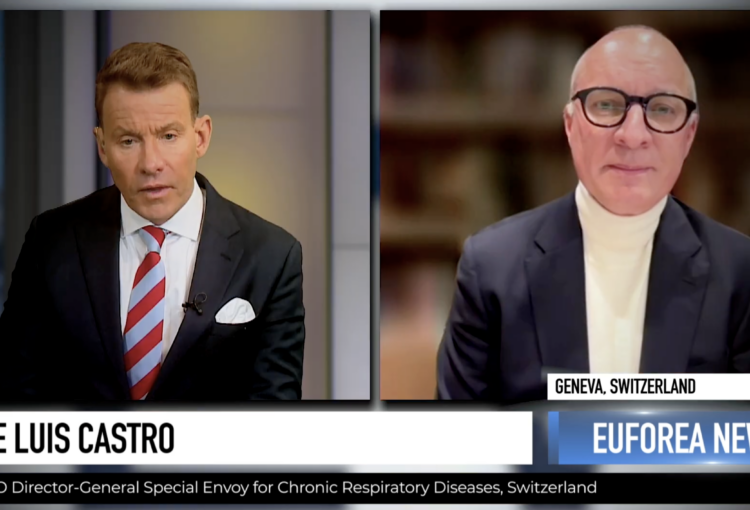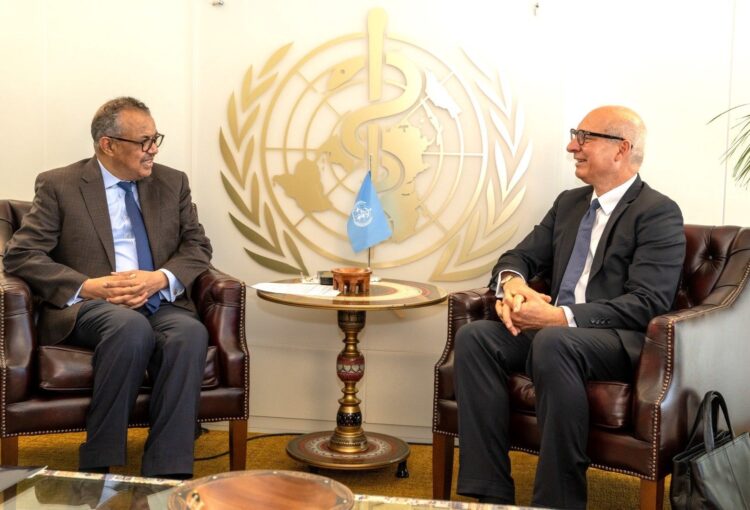

“Anyone who breathes can develop COPD. The world is at risk, and chronic respiratory diseases must be treated as both a global environmental and public health challenge,” warned José Luis Castro, the World Health Organization’s (WHO) special envoy for Chronic Respiratory Diseases.
Speaking at an international press conference in Kuala Lumpur on Wednesday ahead of World COPD Day on November 19, Castro cautioned that Chronic Obstructive Pulmonary Disease (COPD)remains one of the most underestimated global health threats despite killing 3.5 million people every year and affecting over 390 million.
He described COPD and asthma as “Cinderella diseases” – common, costly, and devastating, yet long neglected in global health priorities.
“Breathing is something we all share. Yet for millions, it remains a daily struggle,” Castro said, while addressing journalists from Bangladesh, Thailand, Indonesia, the UK, and the United States.
Beyond smoking: Air pollution, biomass fuel, and occupational risks
Castro stressed that COPD is not just a smoker’s disease.
“The risk extends beyond tobacco to include air pollution, biomass fuel exposure, and occupational hazards that affect billions every day,” he said, responding to questions from reporters from heavily polluted cities such as Dhaka and Bangkok.
He called COPD both an environmental and economic emergency, costing the global economy around $150 billion annually, out of an estimated $2 trillion in non-communicable disease costs.

‘Clean air is a human right’
Framing clean air as a fundamental human right, Castro urged governments to enforce the WHO air quality guidelines.
He cited University of Chicago research showing that nations implementing these standards saw their citizens gain nearly two years of life expectancy.
“We have the science, we have the evidence – what we need is political will,” he said.
He also called for modernized public health campaigns using “the same tools as the tobacco and vaping industries — social media, influencers, and constant messaging — not just once a year on World COPD Day, but every day.”
Malaysia’s leadership praised
Castro praised Malaysia’s leadership in advancing a landmark WHO resolution on integrated lung health, adopted at the 178th World Health Assembly earlier this year and co-sponsored by 15 countries, including Bangladesh, China, Thailand, and Japan.
“Malaysia has shown that it doesn’t have to be this way,” he said, citing the country’s initiatives to reduce tobacco use, improve air quality, and strengthen primary healthcare.
Asia’s air crisis
The warning resonated strongly in South and Southeast Asia, where air pollution is among the world’s worst.
A Bangladeshi journalist pointed out that Dhaka residents lose more than five years of life expectancy due to pollution alone, even among non-smokers – raising questions about access to screening and treatment for low-income populations.
Castro responded that national governments must take responsibility for regulation, enforcement, and local implementation.
“Every breath someone takes in a polluted city, every child exposed to secondhand smoke — these are preventable harms,” he said.
‘Cinderella diseases’ no more
Castro noted that chronic respiratory illnesses, including asthma and COPD, affect more than 650 million people worldwide but have remained “too often left behind.”

“Our task is to bring this issue from the obituary pages to the front page – to make respiratory health a matter of justice, equity, and human dignity,” he urged.
From awareness to action
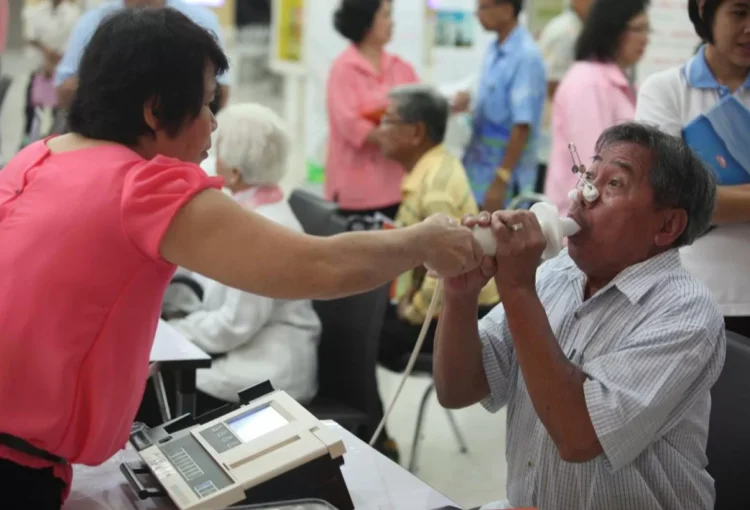
Highlighting Malaysia’s AI-powered lung health screening programme, Dr Noor Aryana Hassan, director of Malaysia’s Disease Control Division, said the country has already screened more than 3,700 people since July.
“Fragmented programs do not work. We must integrate communicable and non-communicable diseases,” she added.
Dr Sami Sundaram, president-elect of the NCD Alliance, underscored the role of civil society and media.
“If you amplify lived experiences, you can influence politicians. Media plays a huge role in driving change,” she said.
As World COPD Day approaches, Castro’s message was clear: “With 650 million people living with chronic respiratory diseases, and 82% of premature deaths occurring in low- and middle-income countries, the time for coordinated global action is now.”
“Every breath matters,” he concluded. “Let’s make that more than a slogan – let’s make it reality.”
The international journalist training workshop on chronic respiratory diseases continues in Kuala Lumpur this week, bringing together media professionals from across Asia, Europe, and North America ahead of World COPD Day.